Complete Classification of Outdoor Laser Lights, How to Choose Without Mistakes for Different Scenarios
Outdoor laser lights are not a “one-size-fits-all” product. They can be divided into various types according to purposes, power, colors and other dimensions. Choosing the right type can make the light and shadow effect twice as effective with half the effort. First, divided by purpose, the most common are entertainment laser lights and industrial laser lights. In outdoor scenarios, entertainment laser lights are the main ones, widely used in cultural tourism, commerce, celebrations and other fields, while industrial laser lights are mostly used in professional scenarios such as engineering surveying and mapping, and security warnings.
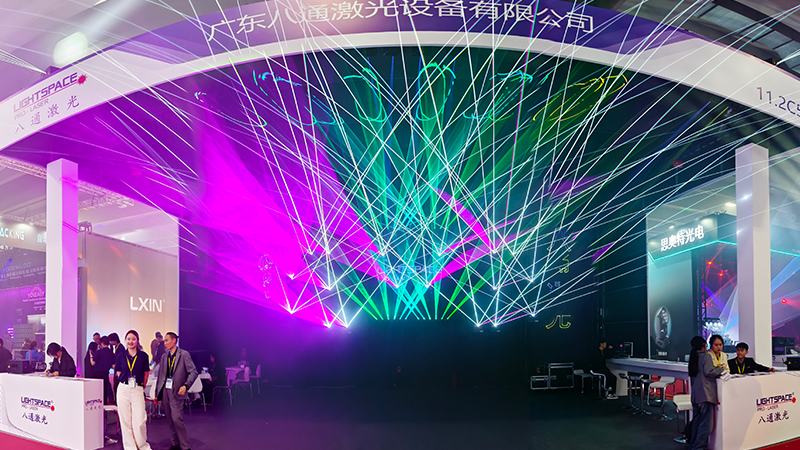
Divided by laser color, they can be divided into single-color, dual-color and full-color. Single-color laser lights (mostly green and red) have high cost performance and are suitable for simple beam projection, such as roof landmark indication; dual-color laser lights (red-green, red-blue combinations) have richer effects and are suitable for small square and park lighting; full-color laser lights (RGB three colors) can achieve tens of millions of color gradients, combined with animation programming, suitable for large-scale cultural tourism light and shadow shows, concerts and other scenarios.
Divided by power, the power of outdoor laser lights ranges from a few watts to dozens of watts. The higher the power, the farther the range and the wider the coverage. 3-10W is suitable for courtyards and small commercial scenarios; 10-30W is suitable for scenic spots and large squares; more than 30W is used for large-scale projects such as urban landmarks and mountain lighting. In addition, according to the projection method, it can also be divided into single-projection, dual-projection and multi-projection laser lights. Multi-projection equipment can create a more three-dimensional light and shadow effect. Mastering these classifications and combining the needs and budget of your own scenario can easily avoid mistakes in selection.